Water damage checklist
What to do after water damage in Fort Myers
The first hour matters. Stop the source if it is safe, document the damage, protect yourself from electrical or contaminated-water hazards, and start drying before moisture moves deeper into the structure.
First move
Make the area safe before cleanup starts
If water is near outlets, appliances, the electrical panel, or sagging ceilings, stay out of the affected area and request help. Water can hide electrical and structural hazards before the room looks dangerous.
If the source is a supply line, appliance, or water heater and you can safely reach the shutoff, stop the water. If the source is a roof leak or stormwater, do not climb or enter unsafe rooms during active weather.
- 01 Shut off the water source if it is safe.
- 02 Avoid standing water near electrical systems.
- 03 Keep children and pets away from wet rooms.
- 04 Treat sewage, floodwater, or unknown water as contaminated.
- 05 Request extraction if water is spreading under floors, walls, or cabinets.
Documentation
Photograph the loss before you throw things away
Fort Myers Beach recovery guidance and Florida insurance guidance both emphasize documentation. Take wide room photos, close-ups of water lines and damaged materials, and video showing where the water traveled.
Make a simple room-by-room list while the details are fresh. Include affected flooring, drywall, baseboards, cabinets, furniture, appliances, and belongings. Save receipts for emergency repairs or drying help.
Wide shots
Show each affected room, entry point, and how far water spread.
Close-ups
Capture pipe failures, appliance lines, staining, swollen materials, and damaged contents.
Receipts
Keep invoices for cleanup, extraction, temporary repairs, hotel stays, and materials.
Timeline
Write down when the loss was found, when the source stopped, and when drying began.
Drying
Remove water fast, then verify what is still wet
Surface drying is not the same as structural drying. Water can wick behind baseboards, under vinyl plank, into carpet pad, behind cabinets, and into wall cavities.
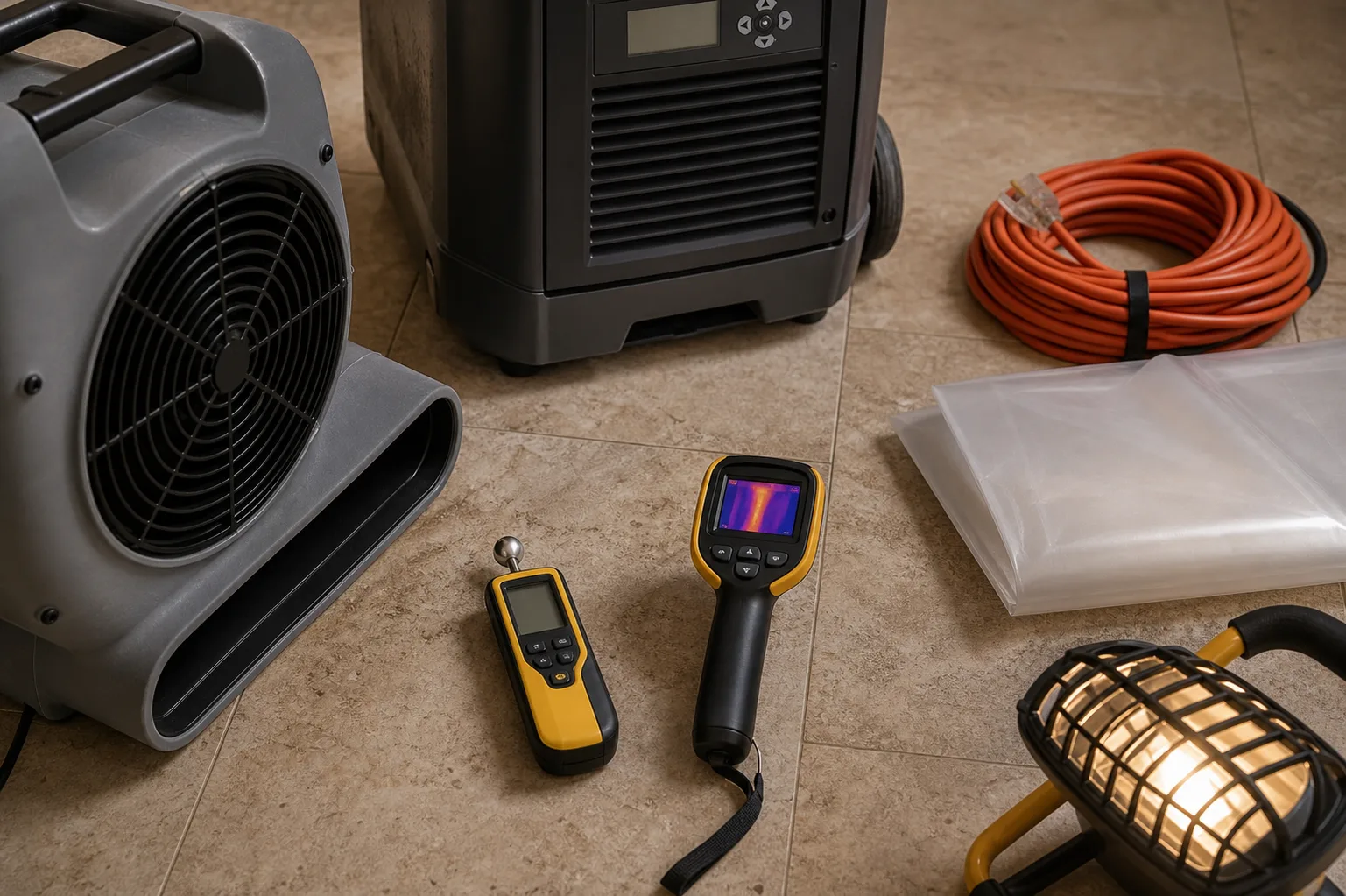
EPA guidance focuses on responding within 24-48 hours to reduce mold risk. In SW Florida humidity, extraction, dehumidification, airflow, and moisture readings matter more than simply pointing a fan at a wet floor.
Standing water
Extraction removes water before it keeps traveling into flooring, drywall, and subfloor.
Water removalHidden moisture
Moisture meters and thermal imaging help find wet materials that still look dry from the surface.
Hidden signsMold risk
If materials stay wet past the early drying window, mold cleanup can become part of the loss.
Mold guideWhen to call
Call for professional drying when the loss is bigger than surface cleanup
A small clean-water spill on tile can often be handled quickly. A plumbing leak that reaches drywall, cabinets, carpet, insulation, subfloor, or multiple rooms is different.
Professional help is especially important when water is contaminated, the affected area is large, moisture has been present overnight, or you plan to file an insurance claim and need documentation.
- 01 Water has reached walls, baseboards, cabinets, carpet pad, or subfloor.
- 02 You smell mustiness or see staining after cleanup.
- 03 The water source may be sewage, floodwater, or stormwater.
- 04 You need moisture readings and photos for an insurance file.
- 05 The home has elderly residents, children, asthma concerns, or immune-compromised occupants.
Related guides
Keep researching the same loss.
Research sources
Source-backed guidance.
These support pages use official cleanup, flood recovery, and Florida insurance resources where possible.
FAQ
Common questions.
-
Should I clean up water damage myself before calling anyone?
Stop the source and move valuables if it is safe, but document the damage first if insurance may be involved. Avoid DIY cleanup when water is near electrical systems, may be contaminated, or has reached walls, cabinets, carpet pad, insulation, or subfloor.
-
How soon does water damage need drying?
EPA mold-prevention guidance focuses on the first 24-48 hours. That window is a guideline, not a guarantee, but quick extraction, dehumidification, and moisture checks are important in Fort Myers humidity.
-
What should I save for insurance?
Save photos, videos, written notes, damaged-item lists, receipts, failed parts if available, contractor invoices, moisture readings, and every message from your insurer or adjuster.
Service
Water Damage Restoration
24/7 Fort Myers water damage restoration with extraction, structural drying, moisture checks, and insurance-ready documentation.
OpenService
Emergency Water Removal
Fast emergency water removal for standing water from burst pipes, appliance leaks, storm intrusion, and overflows.
OpenService
Flood Damage Cleanup
Flood cleanup for Fort Myers homes and businesses: extraction, debris removal, sanitizing, drying, and claim documentation.
OpenService
Mold Remediation
Mold remediation support after leaks, floods, and hidden moisture, focused on containment, cleanup, and moisture control.
OpenNeed help now?
Water damage spreads while you wait.
Request emergency help for extraction, drying, moisture checks, and insurance-ready documentation.
Verified partner details, certifications, reviews, and license information will be added after a legitimate local restoration business is attached.