Hidden moisture guide
Signs of hidden water damage in walls, floors, and cabinets
A room can look dry while water is still trapped in wall cavities, baseboards, flooring, cabinets, insulation, or subfloor. Hidden moisture is what turns a small leak into mold, odor, and repair problems.
Warning signs
What hidden water damage looks and smells like
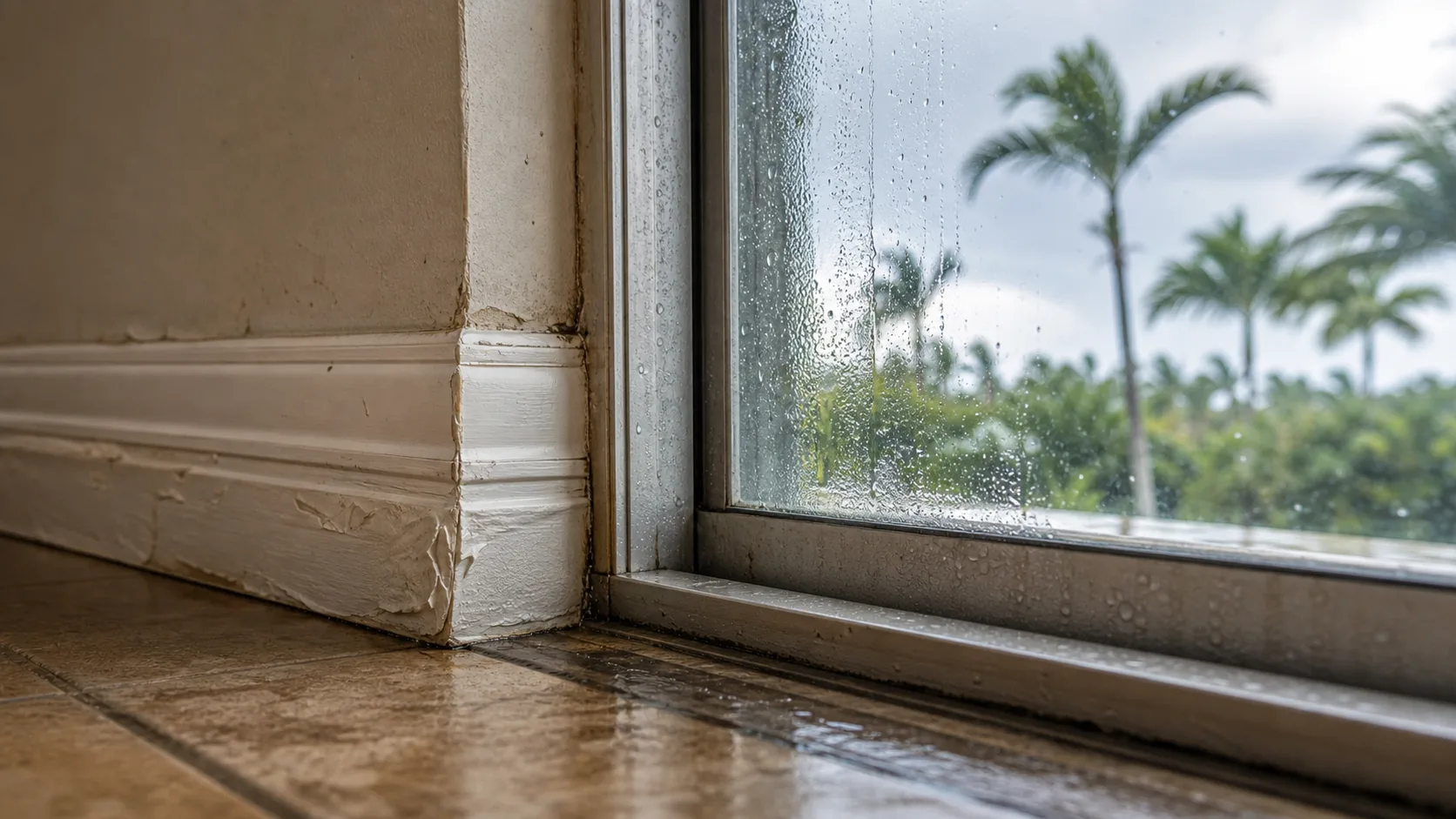
Hidden water damage usually shows up as small clues before it becomes obvious. In Fort Myers humidity, those clues deserve fast attention because damp materials may not dry on their own.
Look for changes in texture, odor, color, or shape. If the room smells musty after cleanup, the moisture problem may still be active.
Musty odor
A damp, stale smell can mean moisture remains behind walls, flooring, cabinets, or trim.
Bubbling paint
Paint or drywall paper can blister when moisture is trapped behind the surface.
Swollen trim
Baseboards, door casing, and cabinet toe kicks can cup, swell, or separate.
Soft floors
Spongy, cupped, or lifting flooring may indicate water under the finished surface.
Staining
Yellow, brown, gray, or dark spots can show where water migrated and dried unevenly.
Recurring humidity
Condensation, damp closets, or high indoor humidity can keep materials wet.
Where water hides
Check the assemblies that trap moisture
Water follows gravity, seams, cavities, and capillary paths. A supply-line leak can start in one room and show up along a different wall, under a cabinet, or below flooring.
The EPA cleanup table emphasizes that flooring systems and subfloor under carpet or other materials also need to be cleaned and dried. That is the part homeowners often cannot see.
- 01 Behind baseboards and lower drywall.
- 02 Inside cabinet boxes, toe kicks, and wall backs.
- 03 Under vinyl plank, laminate, wood, tile edges, carpet, and carpet pad.
- 04 Inside ceiling cavities after an overhead leak.
- 05 Behind bathroom vanities, laundry walls, and refrigerator lines.
- 06 Around AC condensate lines and water heater pans.
Why it matters
Surface-dry rooms can still fail later
Incomplete drying can lead to odor, mold growth, material swelling, paint failure, floor movement, and repair delays. In insurance situations, missing hidden moisture can also complicate the claim timeline.
Moisture mapping gives you a room-by-room record: what was wet, where the water traveled, and whether the structure is trending dry.
Moisture meter readings
Pin and pinless meters help compare affected materials with dry reference areas.
Thermal imaging
Temperature patterns can point to areas that need meter confirmation.
Drying logs
Daily readings show progress and support the repair handoff.
Next step
When to request a moisture check
Request a professional moisture check when water reached walls, cabinets, carpet, flooring seams, ceilings, or multiple rooms. Do the same if the room smells musty, paint bubbles, trim swells, or the floor changes shape after cleanup.
A fast check is cheaper than discovering mold after repairs start.
Water damage restoration
Map moisture, dry hidden materials, and plan repairs.
Restoration helpMold after water damage
Know when a water loss becomes a mold concern.
Mold guideEmergency water removal
Start with extraction when standing water is still present.
Water removalRelated guides
Keep researching the same loss.
Research sources
Source-backed guidance.
These support pages use official cleanup, flood recovery, and Florida insurance resources where possible.
FAQ
Common questions.
-
Can water damage be hidden behind walls?
-
Why does my house smell musty after water cleanup?
-
Can I rely on touch to tell if drywall is dry?
Service
Water Damage Restoration
24/7 Fort Myers water damage restoration with extraction, structural drying, moisture checks, and insurance-ready documentation.
OpenService
Emergency Water Removal
Fast emergency water removal for standing water from burst pipes, appliance leaks, storm intrusion, and overflows.
OpenService
Flood Damage Cleanup
Flood cleanup for Fort Myers homes and businesses: extraction, debris removal, sanitizing, drying, and claim documentation.
OpenService
Mold Remediation
Mold remediation support after leaks, floods, and hidden moisture, focused on containment, cleanup, and moisture control.
OpenHidden moisture check
Do not repair over trapped water.
Request help finding hidden moisture before odor, mold, or material failure turns into a larger repair.
Verified partner details, certifications, reviews, and license information will be added after a legitimate local restoration business is attached.