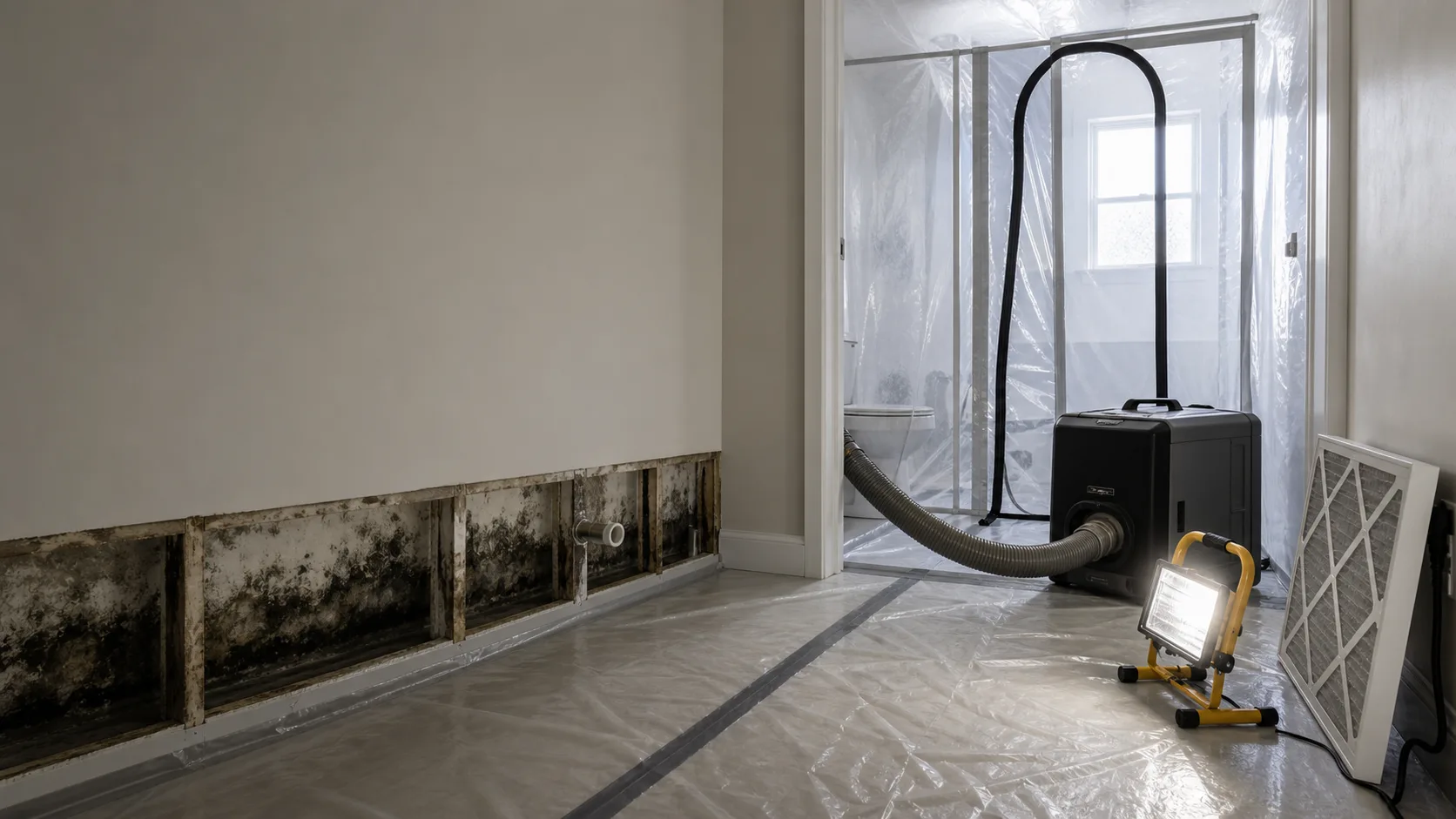
Mold after water damage
Mold after water damage: what Fort Myers homeowners should know
Mold is usually a moisture problem before it is a cleaning problem. After water damage, the priority is to remove standing water, dry wet materials, control humidity, and confirm that the moisture source is fixed.
Timeline
The 24-48 hour window is a warning, not a guarantee
EPA guidance presents water-damage cleanup strategies for the first 24-48 hours to reduce the chance of mold growth. The homeowner disaster guide says that if a flooded home and belongings cannot be dried in that window, you should assume mold growth may be present.
That does not mean mold always appears at hour 49. It means wet porous materials in a warm, humid place like Fort Myers should be treated seriously and dried quickly.
First day
Stop the source, document the damage, remove standing water, and begin controlled drying.
Day two
Verify hidden areas with moisture readings. Surface drying is not enough.
After 48 hours
If materials stayed wet, inspect for mold, odor, and materials that cannot be cleaned or dried.
Safety
Do not spread mold while trying to dry the room
EPA guidance warns not to use fans before determining that water is clean or sanitary, and the disaster cleanup guide notes that fans should not be used when mold has already started to grow because they may spread mold.
Use protective equipment around moldy or contaminated materials. People with asthma, immune concerns, or respiratory symptoms should avoid moldy areas and cleanup work.
- 01 Avoid moldy rooms if you have asthma or immune-system concerns.
- 02 Do not mix cleaning products.
- 03 Do not paint or caulk over mold.
- 04 Do not run fans across visible mold growth.
- 05 Fix the water source before rebuilding or repainting.
- 06 Use qualified help for larger, contaminated, or hidden mold problems.
What to inspect
Mold often starts where water stayed hidden
Mold can grow under carpet, behind baseboards, inside wall cavities, on drywall paper, in cabinet backs, around AC condensate leaks, and anywhere porous materials stayed damp.
A musty smell after cleanup is one of the clearest signs that water may still be trapped or mold may be active.
Carpet and pad
Pad can stay wet long after the carpet surface feels dry.
Drywall and trim
Paper-faced drywall and wood trim can hold moisture and organic material.
Cabinets
Toe kicks and cabinet backs trap water against walls and slabs.
HVAC areas
Condensate leaks and damp closets can keep feeding humidity and odor.
Insurance
Mold documentation starts with water documentation
Florida CFO guidance notes that mold from a covered peril may be covered, but coverage can be limited or excluded. That is why the water-loss timeline matters: source, date discovered, reporting, drying actions, and inspection results.
If mold follows a burst pipe or sudden water release, save the same evidence you would for the water claim: photos, mitigation invoices, moisture readings, damaged material lists, and adjuster communications.
Coverage guide
Read how water source and policy terms affect Florida claims.
Insurance guideMold remediation
Get containment, cleanup, moisture correction, and a repair handoff.
Mold serviceHidden signs
Find the clues that moisture is still active.
Hidden moistureRelated guides
Keep researching the same loss.
Research sources
Source-backed guidance.
These support pages use official cleanup, flood recovery, and Florida insurance resources where possible.
FAQ
Common questions.
-
How fast can mold grow after water damage?
EPA and disaster cleanup guidance use 24-48 hours as an important drying window. Mold does not always grow after that exact time, but wet materials in Fort Myers humidity should be dried and checked quickly.
-
Should I test for mold after water damage?
EPA disaster cleanup guidance says sampling is not usually recommended for homeowners because cleanup and moisture correction matter regardless of mold type. Professional inspection may still be useful when growth is hidden, extensive, or disputed.
-
Can I paint over mold after a leak?
No. Painting or caulking over mold does not fix the moisture problem. The source needs to be corrected, mold cleaned or removed, and materials dried before repairs.
Service
Water Damage Restoration
24/7 Fort Myers water damage restoration with extraction, structural drying, moisture checks, and insurance-ready documentation.
OpenService
Emergency Water Removal
Fast emergency water removal for standing water from burst pipes, appliance leaks, storm intrusion, and overflows.
OpenService
Flood Damage Cleanup
Flood cleanup for Fort Myers homes and businesses: extraction, debris removal, sanitizing, drying, and claim documentation.
OpenService
Mold Remediation
Mold remediation support after leaks, floods, and hidden moisture, focused on containment, cleanup, and moisture control.
OpenMold risk after water damage
Fix the moisture before it becomes a bigger problem.
Request help with moisture checks, drying, mold-risk cleanup, and a clear documentation trail.
Verified partner details, certifications, reviews, and license information will be added after a legitimate local restoration business is attached.